 (507) 720-3450
 info@fountainscapesandwaterfalls.com



Overview
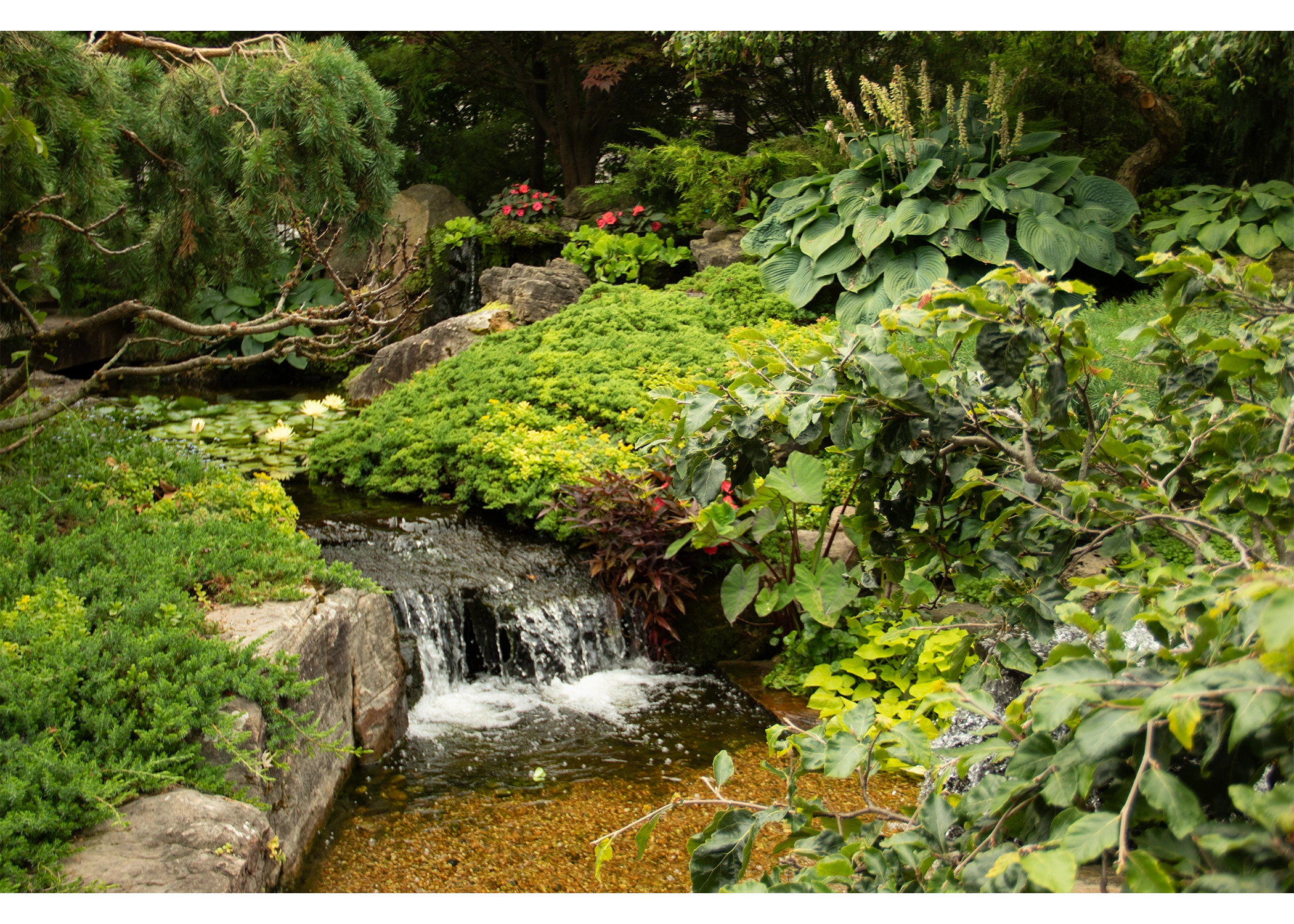
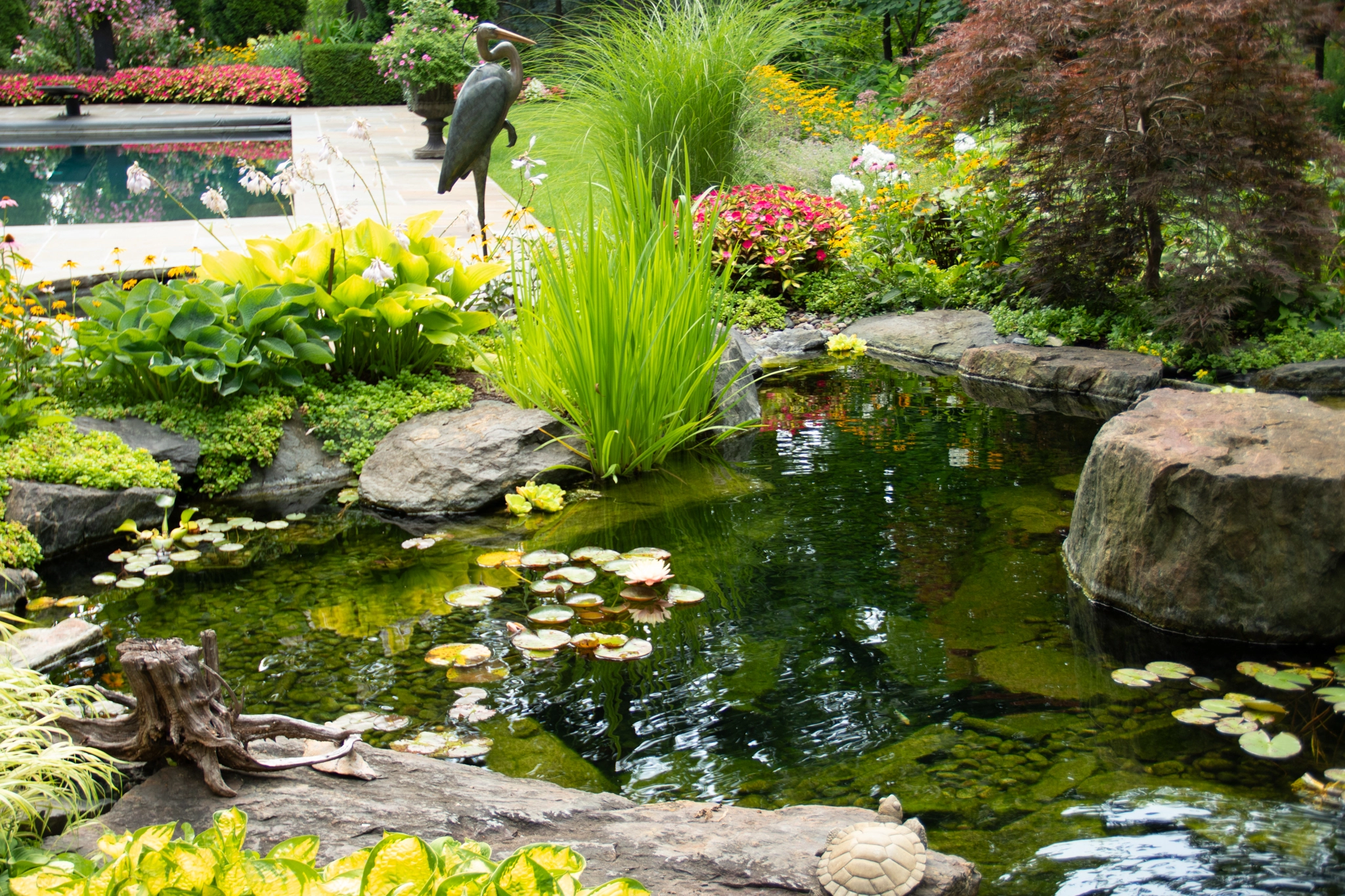
A professionally constructed pond or water feature is a living ecosystem designed to function through natural biological processes. Rather than relying on chemical treatments, ecosystem systems use mechanical filtration, biological filtration, aquatic plants, beneficial bacteria, and continuous circulation to maintain water clarity and fish health.
Residential water features typically fall into several categories:
| Feature Type | Ideal For | Typical Depth |
|---|---|---|
| Ecosystem Pond | Fish, plants, natural habitat | 24–36 inches |
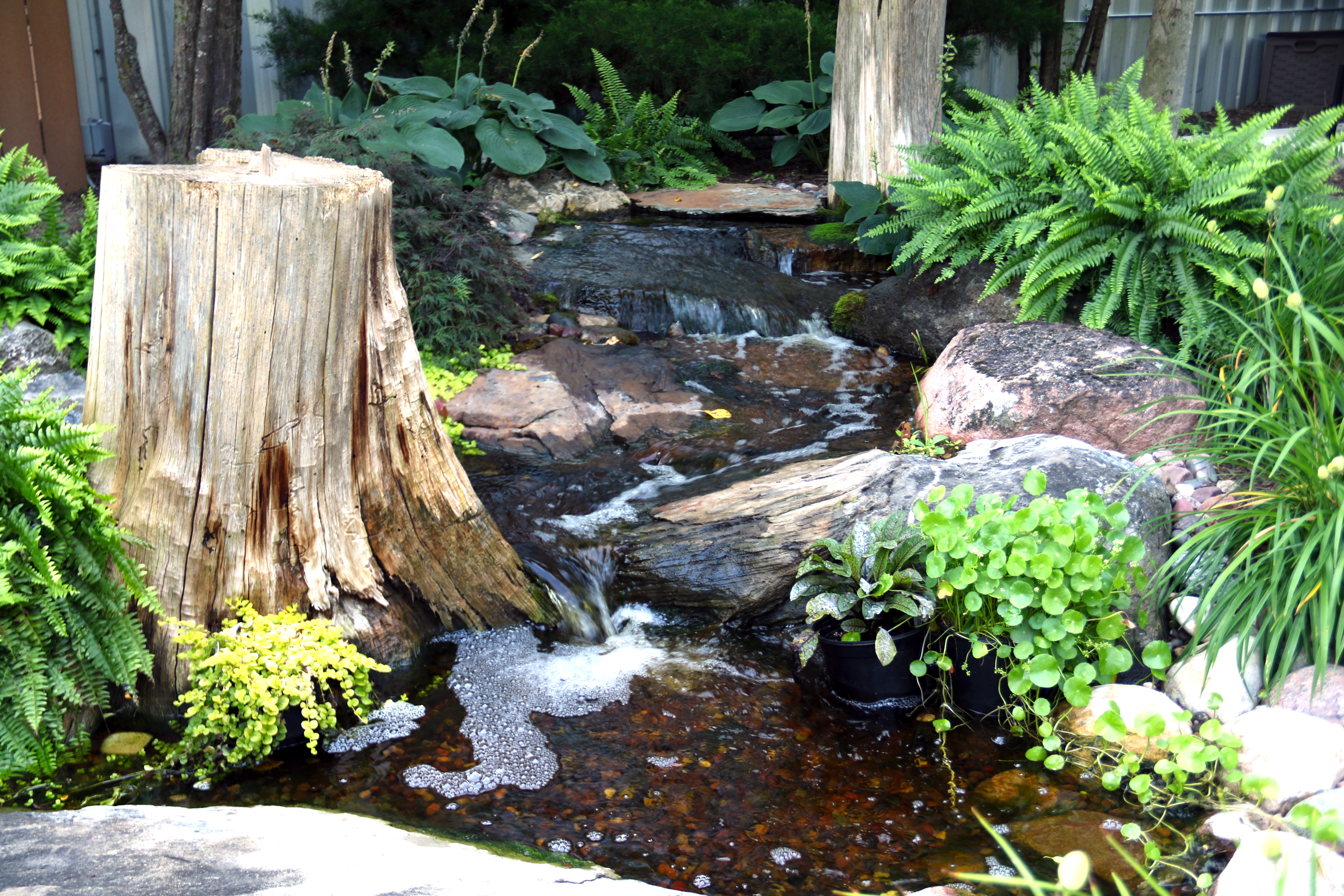
| Pondless Waterfall | Visual and auditory impact without open water | Reservoir-based |
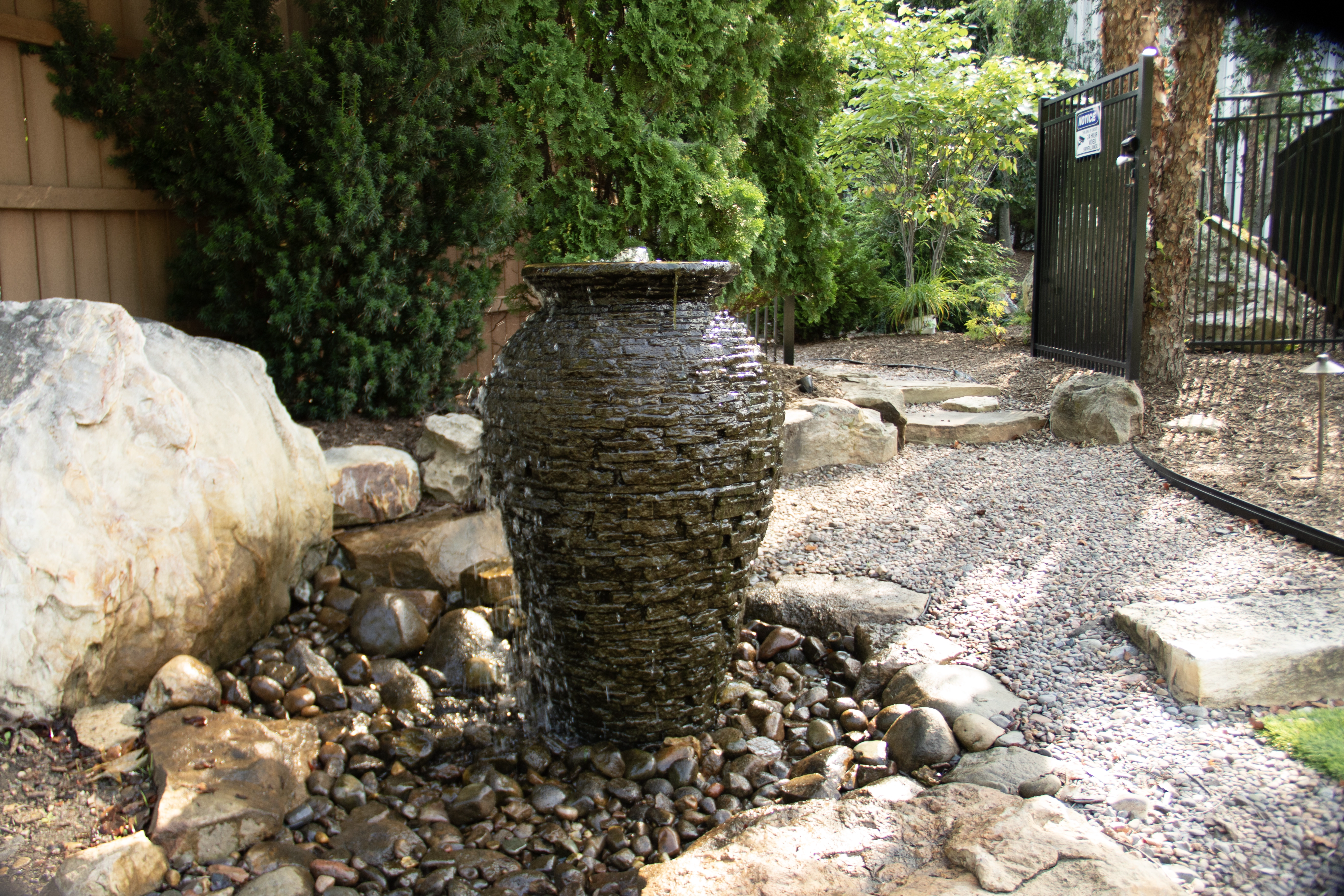
| Fountainscape | Compact areas, patios, entryways | Basin-based |
Each type requires site evaluation, hydraulic planning, and long-term maintenance strategy.
Step-by-Step Process
1. Site Evaluation
- Property grading and drainage assessment
- Sun exposure analysis
- Soil condition review
- Utility location verification
2. Design & Layout
- Feature size and scale planning
- Water flow calculations
- Pump sizing and plumbing configuration
- Rock and material selection
3. Excavation & Structural Prep
- Excavation to engineered depth
- Underlayment and liner installation
- Reservoir or Aquablox installation (for pondless systems)
- Pump vault placement
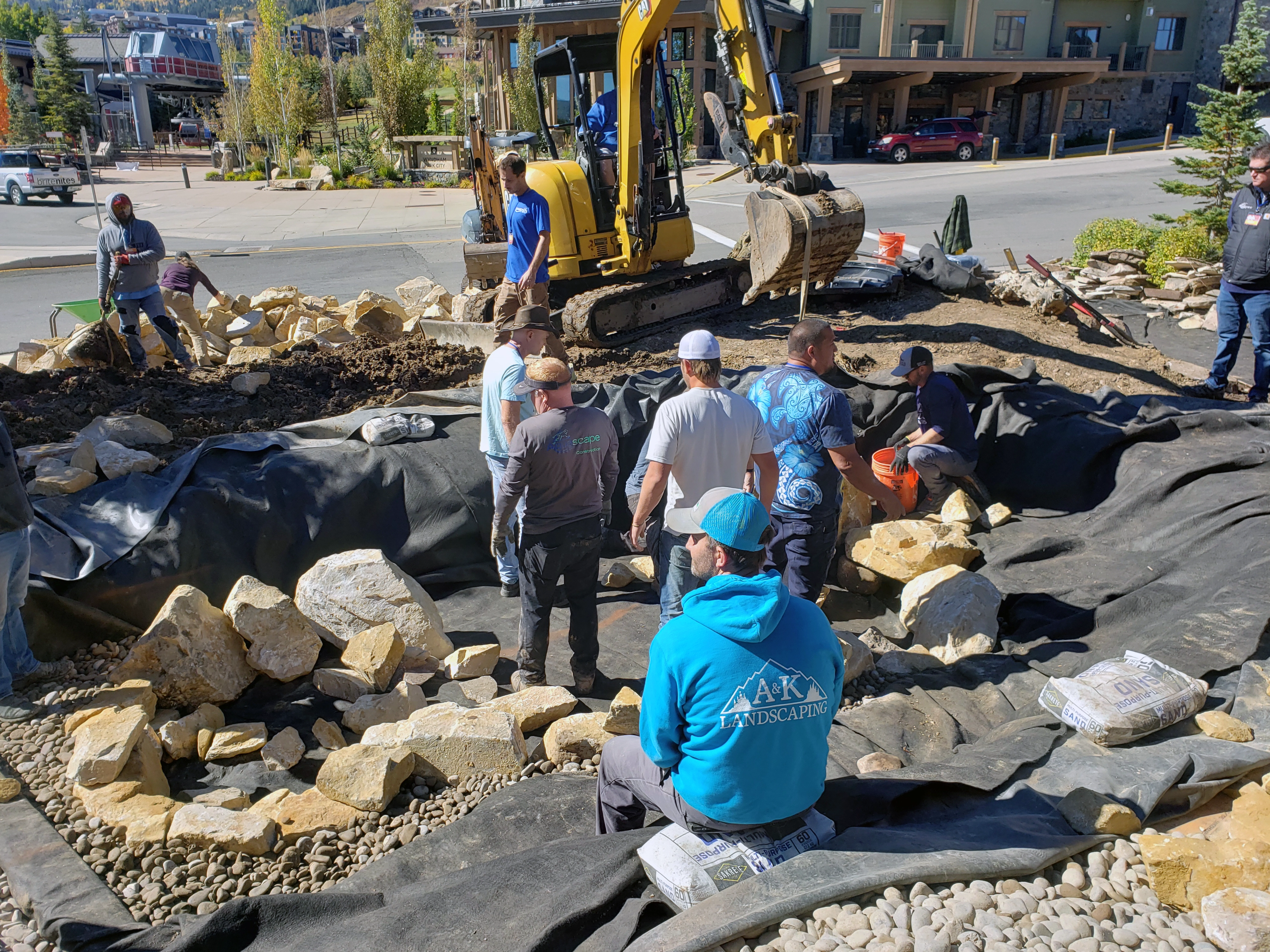
4. Rock Placement & Waterfall Construction
- Structural boulder setting
- Spillway shaping
- Foam sealing for flow control
- Edge treatment and naturalization
5. Filtration & Circulation Setup
- Skimmer installation (pond systems)
- Biological filtration media placement
- Plumbing connections
- Electrical coordination
6. Aquatic Planting & Startup
- Marginal and aquatic plant installation
- Bacterial dosing
- Flow adjustment
- Initial water balancing
Cost & Pricing
Water feature pricing depends on scale, access conditions, materials, and complexity.
| Feature Type | Typical Investment Range (Southern MN) |
|---|---|
| Small Fountainscape | $4,500 – $9,000 |
| Pondless Waterfall | $9,000 – $18,000 |
| Ecosystem Pond | $18,000 – $45,000+ |
| Signature Custom Installation | Project-specific |
Variables affecting cost:
- Excavation difficulty
- Rock size and sourcing
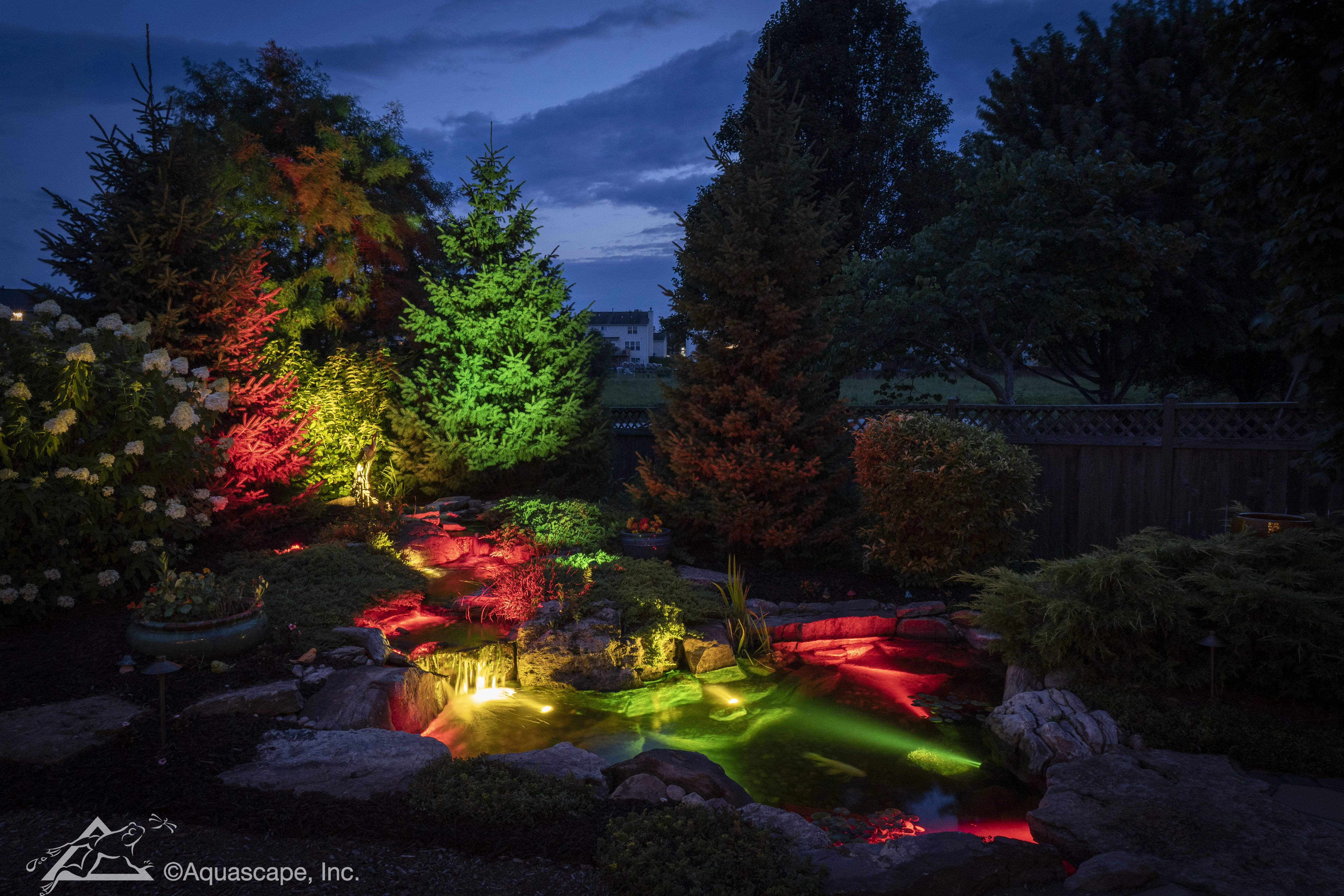
- Lighting systems
- Fish load and filtration requirements
- Access constraints for equipment
A detailed site consultation determines accurate pricing.
Design Considerations
Professional water feature design prioritizes:
- Proper scale relative to home architecture
- Natural stone integration
- Viewing angles from patios and interior windows
- Sound level control
- Lighting placement for nighttime usability
- Safety and child considerations
Hydraulic efficiency and biological balance are engineered into the design from the outset.
Climate / Regional Factors (Minnesota)
Southern Minnesota presents unique environmental considerations:
- Frost depth and freeze–thaw cycles
- Heavy spring runoff
- Summer algae pressure
- Deciduous leaf debris in fall
- Winter shutdown planning
Ponds are typically constructed at approximately 24 inches or deeper to protect fish during winter dormancy. Proper aeration and circulation adjustments are essential during seasonal transitions.

Common Mistakes
- Undersized pumps
- Improper liner protection
- Insufficient biological filtration
- Overcrowded fish stocking
- Poor edge treatment leading to runoff contamination
- Ignoring seasonal maintenance requirements
Professional installation prevents costly reconstruction and long-term water quality issues.
Maintenance
Water features are living systems and require ongoing stewardship.
Typical maintenance includes:
- Spring clean-outs
- Beneficial bacteria treatments
- Filter inspections
- Pump servicing
- Seasonal plant management
- Fall netting and winterization
Maintenance frequency depends on feature size, fish population, and surrounding landscape conditions.
FAQ
How deep should a pond be in Minnesota?
Most residential ecosystem ponds are built at 24 inches or deeper to accommodate winter fish survival and stable water temperatures.
Are ecosystem ponds difficult to maintain?
When properly designed and installed, maintenance is predictable and manageable. Routine seasonal service prevents major issues.
Do ponds attract mosquitoes?
Moving water and proper circulation prevent mosquito breeding. Fish also consume larvae.
How long does installation take?
Most residential installations take 3–10 working days depending on size and complexity.
Can a pond be added to a small backyard?
Yes. Compact ecosystem ponds and fountainscapes are specifically designed for limited spaces.
Do I need a permit?
Permit requirements vary by municipality. Local regulations in Southern Minnesota may apply depending on excavation depth and electrical work.
How long does a pond liner last?
High-quality EPDM liners commonly last decades when properly installed with underlayment protection.
Full Video Transcript
[Transcript placeholder]
About Fountainscapes & Waterfalls
Fountainscapes & Waterfalls
New Ulm, Minnesota
Specialty: Custom water features, ponds, fountains, lighting, and ecosystem-based design.
Fountainscapes & Waterfalls serves homeowners throughout Southern Minnesota with professionally engineered water features built for long-term durability and biological balance. The company is a Certified Aquascape Contractor applicant and follows industry-recognized ecosystem construction standards. Field experience includes residential pond construction, pondless waterfalls, fountainscapes, and seasonal water feature stewardship.
Work With Fountainscapes & Waterfalls
Fountainscapes & Waterfalls designs and builds:
- Ecosystem ponds
- Pondless waterfalls
- Fountainscapes
- Decorative water features
- Landscape lighting systems
Service Area: Southern Minnesota
Winter destination installations: We also serve select communities around North Austin, Round Rock, and Temple–Killeen through scheduled winter travel projects. Explore our Central Texas water feature installations for service-area details, scheduling, and travel-cost information.
To schedule a professional consultation and site evaluation, contact Fountainscapes & Waterfalls in New Ulm to discuss your project goals and property conditions.