 (507) 720-3450
 info@fountainscapesandwaterfalls.com



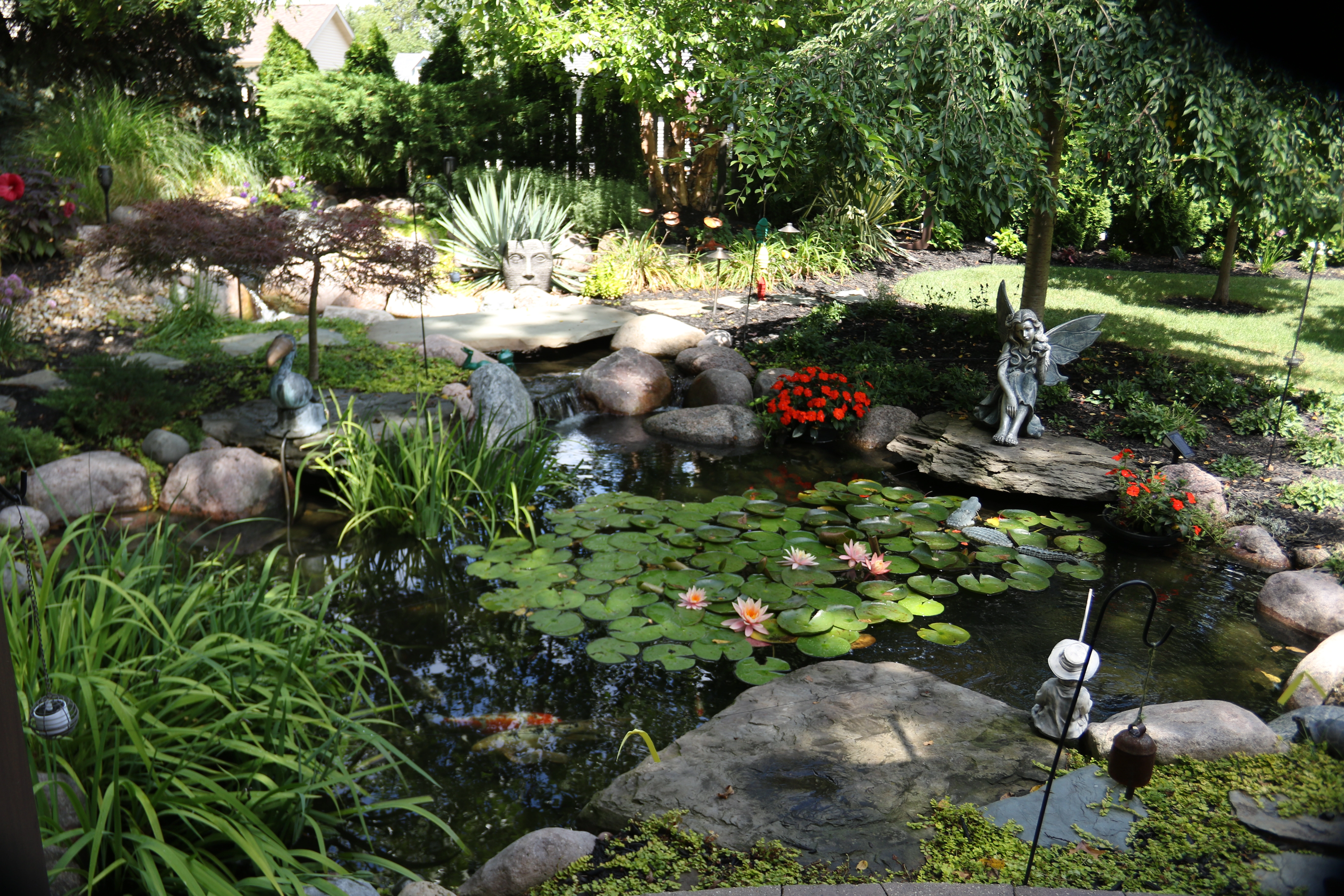
Quick Answer: Are Water Features Hard to Maintain?
Most professionally built water features are not difficult to maintain, but they do require some routine care. The amount of maintenance depends on:
- The type of water feature
- The quality of the installation
- The filtration system
- The amount of surrounding debris
- Seasonal conditions in Minnesota
- Whether the owner performs DIY maintenance or uses a service program
A properly built ecosystem pond or pondless waterfall should feel manageable, enjoyable, and stable, not like a full-time backyard science experiment.
Simple reality: healthy water features are maintained ecosystems, not neglected puddles.
Why Some Water Features Become High Maintenance
Many homeowners hear “pond maintenance horror stories” because poorly designed water features often create unnecessary problems.
A water feature may become frustrating when it lacks:
- Proper circulation
- Skimming and filtration
- Correct pump sizing
- Healthy ecosystem balance
- Good plumbing layout
- Proper edge treatment
- Seasonal maintenance planning
Stagnant water, debris buildup, poor filtration, and neglected pumps create most long-term maintenance headaches. In many cases, the issue is not that the homeowner owns a water feature. The issue is that the system was not designed properly from the beginning.
A professionally planned ecosystem pond behaves very differently than a shallow decorative basin with little movement or filtration.
What Maintenance Actually Looks Like
Most pond and waterfall maintenance is fairly straightforward and seasonal. Healthy systems are usually maintained through small routine tasks rather than constant repair work.
Typical maintenance may include:
- Emptying skimmer baskets
- Removing leaves and debris
- Checking water levels
- Adding beneficial bacteria
- Trimming aquatic plants
- Inspecting pumps and plumbing
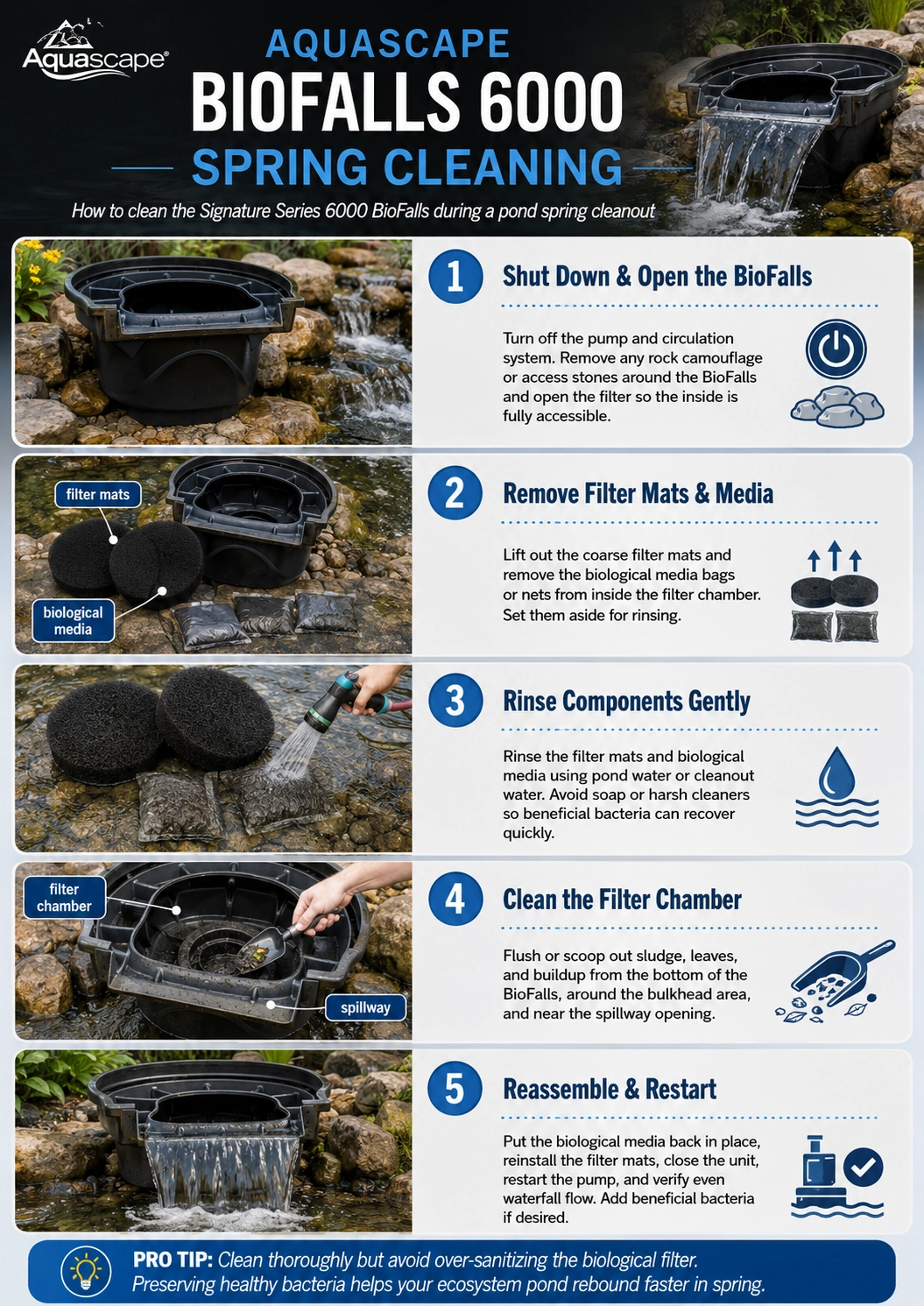
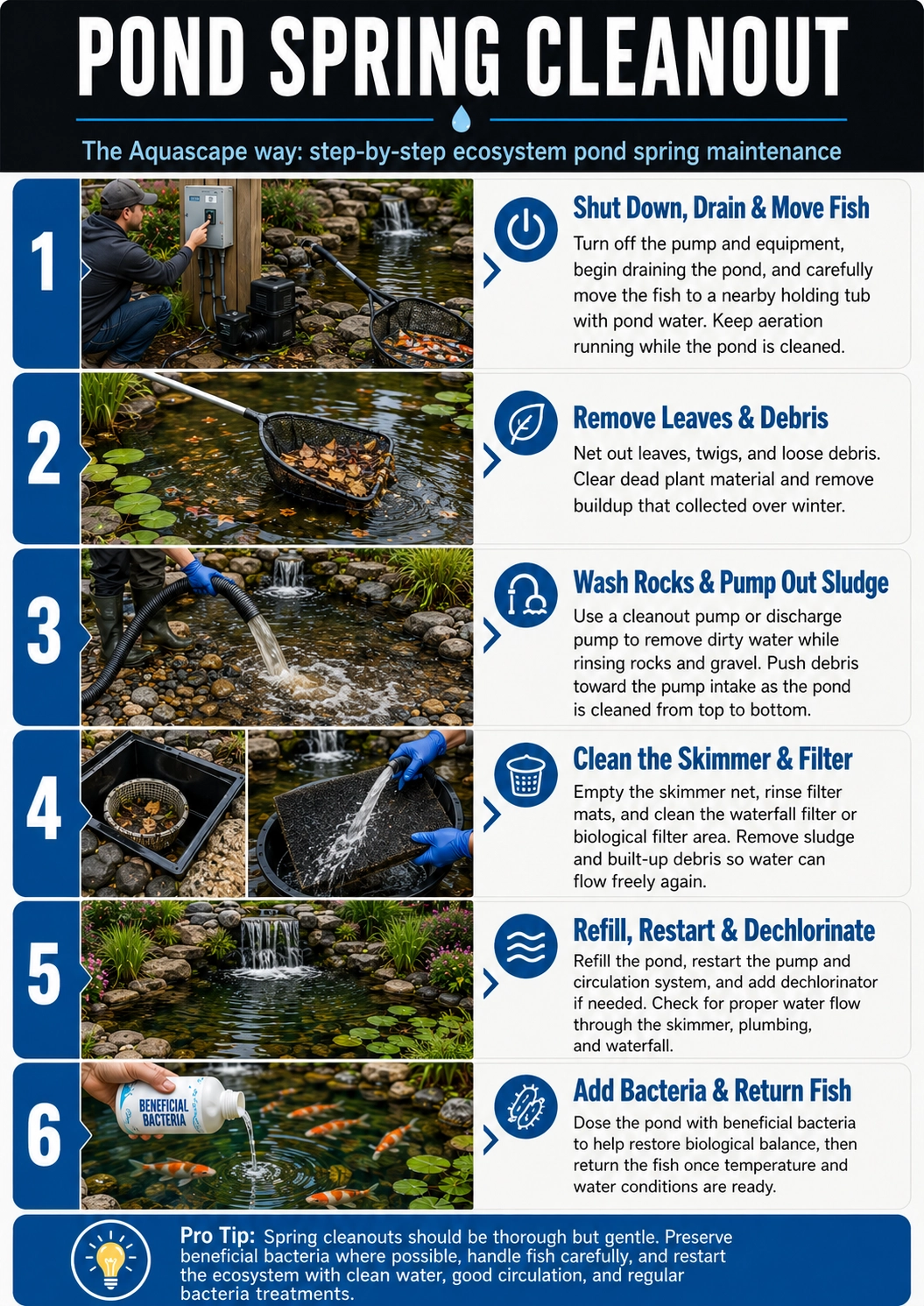
- Seasonal spring clean-outs
- Occasional filter cleaning
Some homeowners enjoy maintaining their pond because it becomes part of the outdoor experience. Others prefer professional maintenance services so they can simply enjoy the water feature without worrying about the details.
Ecosystem Ponds vs Pondless Waterfalls vs Fountainscapes
Ecosystem Ponds
Ecosystem ponds usually require the most involvement because they contain fish, plants, filtration systems, and larger biological environments. However, many pond owners enjoy this interaction because the pond becomes a living part of the landscape.
Proper circulation, skimmers, BioFalls filtration, rock and gravel, aquatic plants, and beneficial bacteria all help reduce maintenance compared to stagnant decorative ponds.
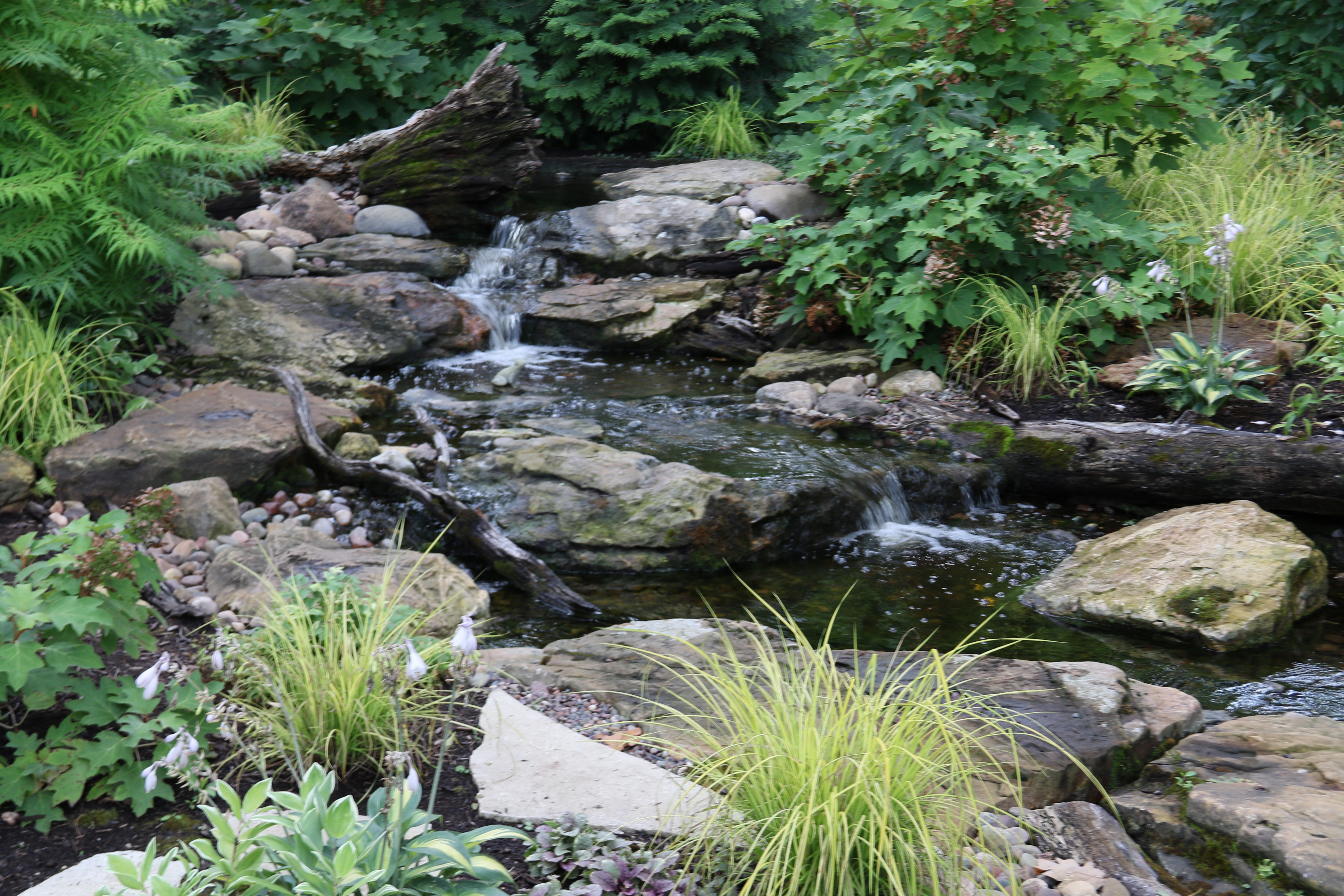
Pondless Waterfalls
Pondless waterfalls are usually lower maintenance because they do not contain an open pond basin. Water recirculates through a hidden underground reservoir, which simplifies cleaning and reduces debris accumulation.
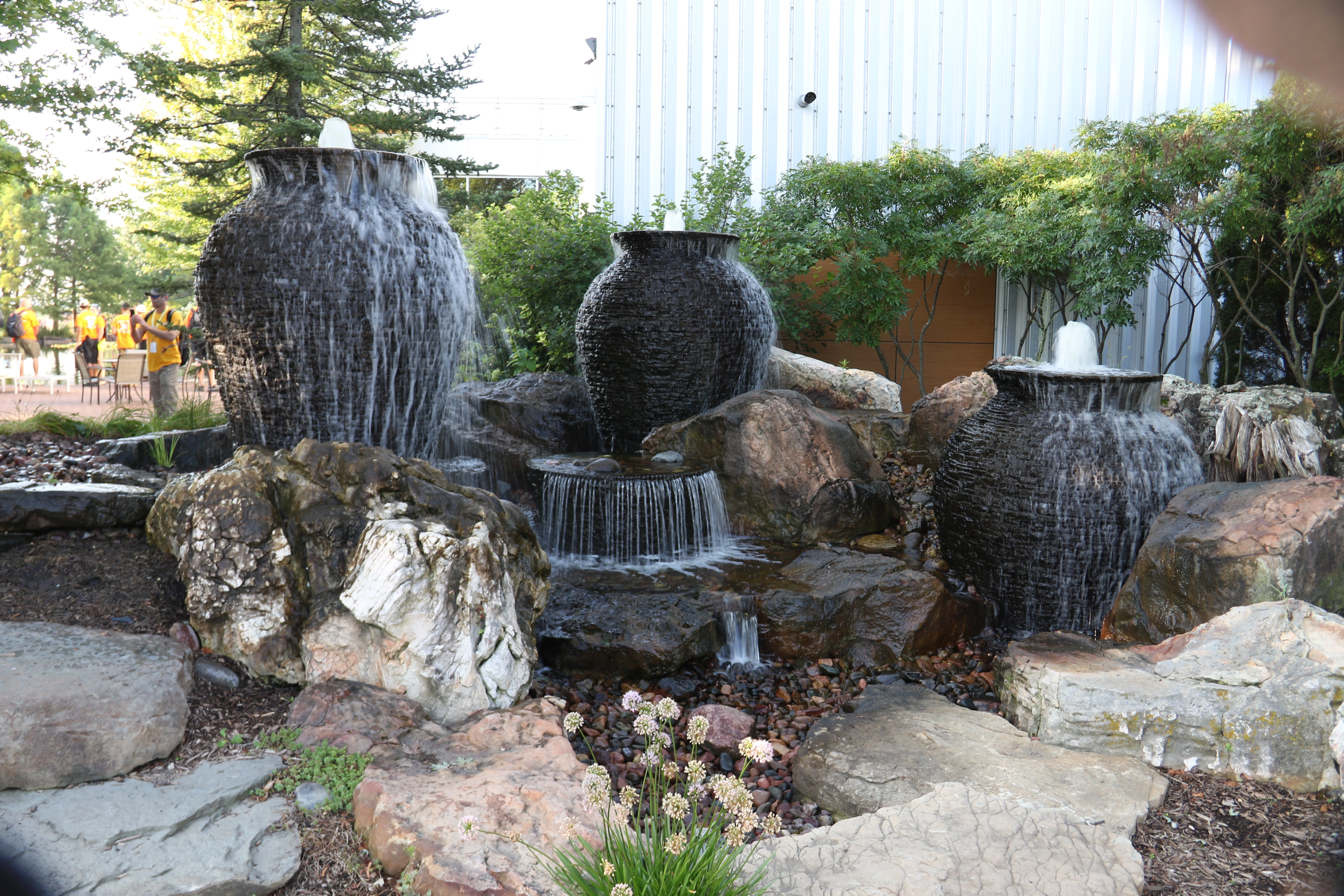
Fountainscapes
Fountainscapes are often the simplest option overall. Decorative fountain bowls, urns, basalt columns, and bubbling stone features usually require less biological management than a full ecosystem pond.
Maintenance often focuses on:
- Pump cleaning
- Water level management
- Seasonal shutdowns
- Debris removal
How Professional Design Reduces Maintenance
One of the biggest differences between a frustrating water feature and an enjoyable one is professional system design.
Features that help reduce maintenance include:
- Properly sized skimmers
- Biological filtration systems
- Healthy water circulation
- Correct pump sizing
- Rock and gravel ecosystem support
- Proper edge treatment
- Accessible plumbing and equipment
- Balanced fish and plant planning
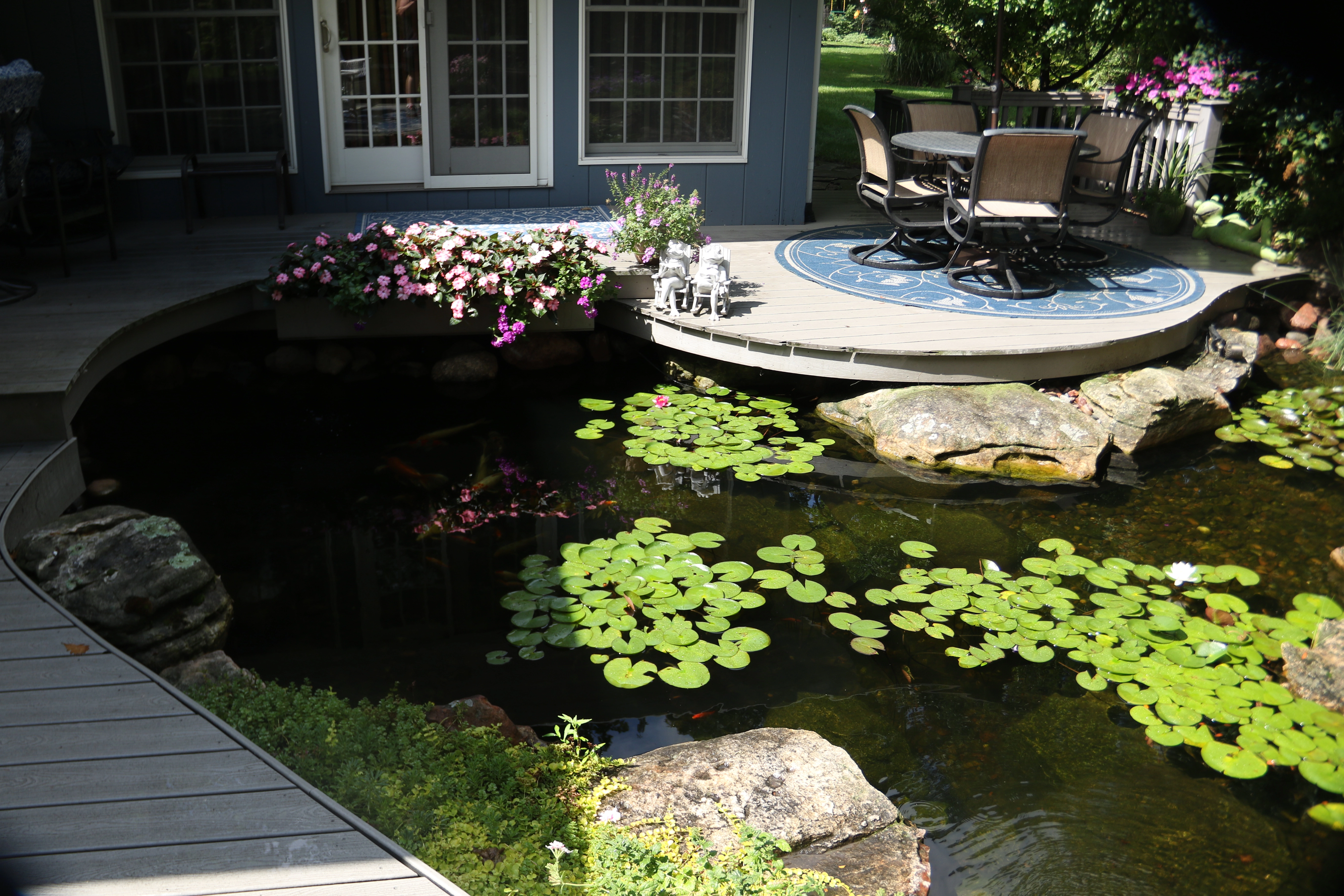
Healthy ponds are designed as ecosystems, not simply decorative holes filled with water.
Minnesota Seasonal Reality
Minnesota weather adds seasonal maintenance considerations that homeowners should understand.
Typical seasonal care may include:
- Spring clean-outs
- Beneficial bacteria startup
- Summer algae management
- Leaf management during fall
- Winter shutdowns or winter circulation planning
- Cold-climate fish care
These seasonal changes are normal parts of pond ownership in cold climates. Proper preparation helps the ecosystem stay healthier and easier to manage throughout the year.
DIY Maintenance vs Professional Maintenance Programs
Some homeowners enjoy maintaining their own water feature and becoming involved in the ecosystem. Others prefer professional maintenance so they can simply enjoy the sound and movement of water without managing seasonal care themselves.
Both approaches are valid.
Professional maintenance programs can help with:
- Spring clean-outs
- Fall shutdowns
- Routine inspections
- Water quality management
- Pump and filtration checks
- Seasonal ecosystem support
For many homeowners, maintenance services provide peace of mind and help extend the long-term health of the water feature.
Frequently Asked Questions
Are backyard ponds difficult to maintain?
Properly built ecosystem ponds are usually much easier to maintain than many homeowners expect. Routine care and seasonal maintenance help keep the pond healthy and balanced.
How often do ponds need maintenance?
Most ponds benefit from routine seasonal care, including debris removal, filtration checks, and annual spring clean-outs.
Do pondless waterfalls require maintenance?
Yes, but pondless waterfalls are usually lower maintenance than full ecosystem ponds because they do not contain an open pond basin.
Are fountainscapes easy to maintain?
Fountainscapes are often one of the simplest water feature types to maintain, especially compared to larger ecosystem ponds with fish and aquatic plants.
How often should a pond be cleaned?
Most ecosystem ponds benefit from a spring clean-out and periodic maintenance throughout the active season depending on debris levels and ecosystem balance.
Can I maintain a pond myself?
Yes. Many homeowners enjoy maintaining their own pond. Others prefer professional maintenance programs for seasonal clean-outs and long-term support.